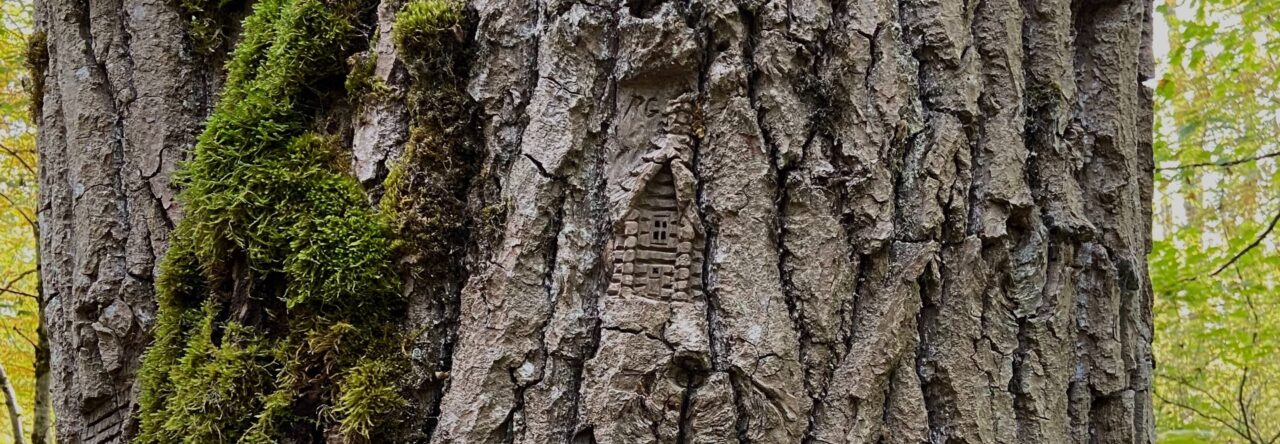
During class, we discussed the importance of visiting a place and experiencing it firsthand to develop a deeper understanding of it. This highlighted the value of experiential learning, which allows students to learn through direct experiences rather than relying solely on classroom instruction. Near the beginning of class, we spent approximately ten minutes individually at a location we called our “sit spot.” This activity encouraged us to slow down, observe our surroundings, and reflect on our relationship with the land.
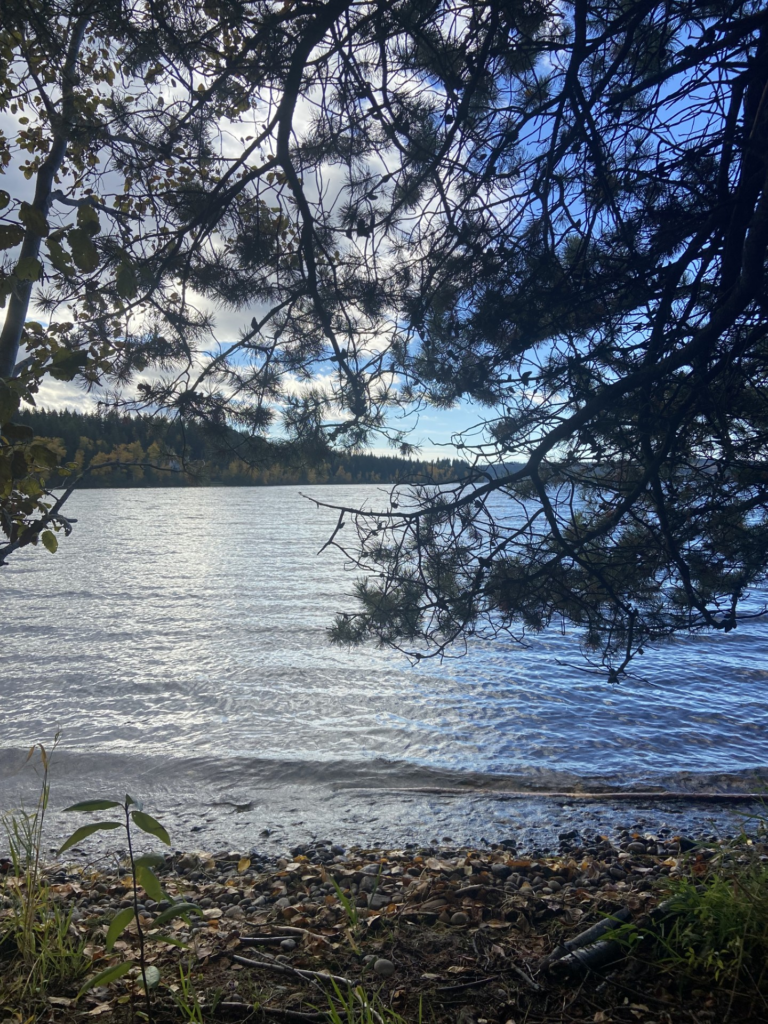
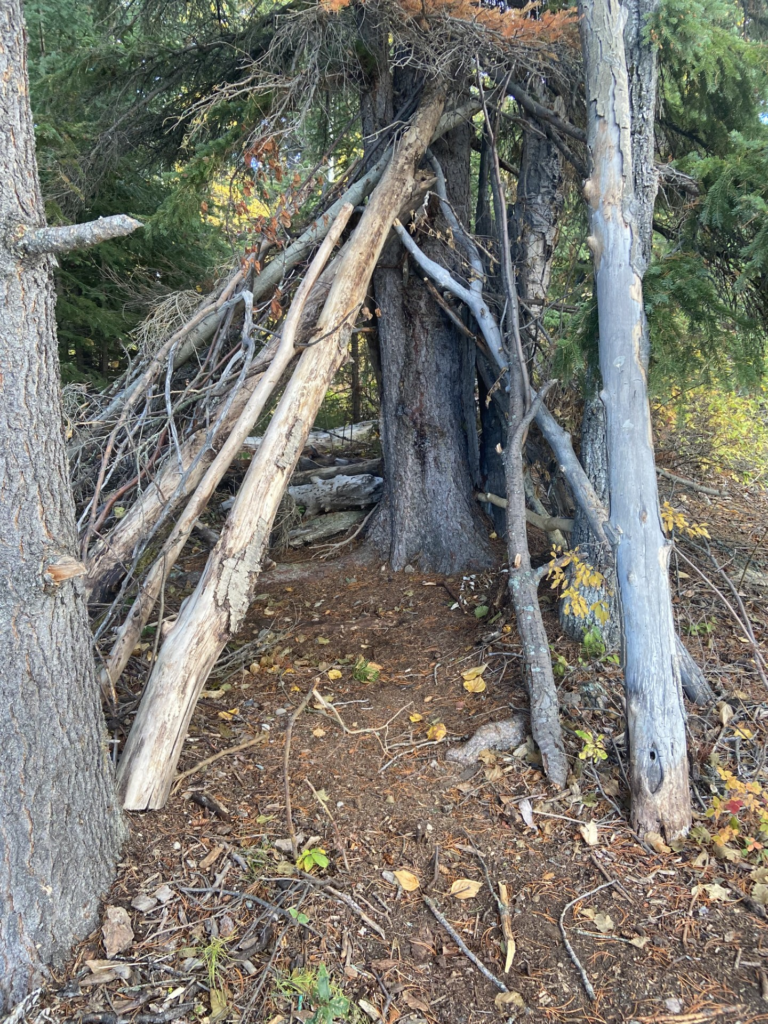
For my sit spot, I found a peaceful location near the lake, underneath the trees and inside a small fort made from branches. As I sat there, I could hear the waves crashing against the shore and the wind moving through the leaves. The peaceful surroundings allowed me to slow down, reflect, and reconnect with my childhood memories of spending time outdoors. The fort reminded me of the forts I used to build with my friends and siblings, using whatever materials we could find in nature. These memories made me reflect on how much nature has provided me with throughout my life without asking for anything in return.
This experience encouraged me to think about the relationship between people and the natural environment. Nature provides us with resources, opportunities for recreation, and spaces where we can find comfort and connection. However, I believe that nature also deserves to receive something in return through our respect, care, and protection. This reflection is particularly meaningful to me as a future teacher because I want to help students develop an appreciation for the natural world. I hope to teach children that caring for the environment is a shared responsibility and that taking action to address climate change is one way we can protect the land for future generations.
My experience at West Lake also reminded me of a field trip I attended in Grade 7, when my class visited an Indigenous historical site. During this visit, an Elder taught us that every part of nature has a story and its own history, including things that are not traditionally considered living. This lesson has stayed with me because it encouraged me to look beyond the physical characteristics of the natural environment and consider the histories and experiences connected to the land. My time at West Lake reminded me that there is much to learn from the places we visit, especially when we take the time to listen, observe, and reflect.
Another aspect of our class that stood out to me was the discussion about land acknowledgements and the suggestion to incorporate a personal story into them. I appreciated this idea because I find that I learn best when people share personal and memorable experiences. Including a meaningful story can make a land acknowledgement feel more personal and encourage people to think more deeply about their relationship with the land. Rather than simply repeating a statement, individuals can reflect on their own experiences and consider the histories, relationships, and responsibilities connected to the place where they live and learn. I believe this approach could also be valuable in the classroom, as it could help students develop a more meaningful connection to the land around them.
I also see potential in incorporating the walking curriculum into future classroom experiences. Rather than simply telling students to go outside and appreciate nature, a walking curriculum provides a framework that encourages them to observe, question, and engage with their surroundings. This approach can make outdoor learning more intentional by helping students recognize details they might otherwise overlook. It also creates opportunities to connect experiences outside the classroom to different areas of the curriculum. Through these activities, students can develop curiosity, environmental awareness, and a stronger appreciation for the natural world.
During our group work, I was particularly interested in learning how Indigenous knowledge and perspectives can be incorporated into every subject area. This challenged me to think more broadly about how Indigenous perspectives can be meaningfully included in my future classroom rather than being limited to specific lessons or units. At the same time, I recognize that Indigenous Peoples and communities are diverse, with distinct histories, cultures, languages, and ways of knowing. Therefore, incorporating Indigenous perspectives requires more than finding resources online or adding Indigenous content to existing lessons. It requires an understanding of the specific community in which I will be teaching and a commitment to developing respectful relationships.
One area I hope to learn more about is how to begin building relationships with Indigenous Peoples and communities in the area where I will eventually teach. I want to incorporate Indigenous principles of learning into my classroom, but I also want to ensure that I do so respectfully and appropriately. I understand that building relationships takes time and that I should not approach community members simply to ask for resources or assistance. Instead, I need to learn how to begin developing relationships based on trust, respect, and reciprocity. I am interested in understanding how to put the Four R’s into practice in a way that reflects these commitments, but I am still unsure what the first steps should look like.
Overall, my experience at West Lake reminded me that learning does not always need to happen inside a classroom. Spending time at my sit spot allowed me to reconnect with childhood memories, reflect on my responsibilities toward the environment, and consider how meaningful relationships with the land can influence teaching and learning. As a future teacher, I hope to create opportunities for students to develop their own connections with the natural world while learning to respect the knowledge and histories associated with the places they inhabit. Moving forward, I want to continue learning how to build meaningful relationships with Indigenous communities so that I can create a classroom environment that values diverse perspectives and approaches Indigenous knowledge with care and respect.
Leave a Reply