People don't remember the things you do, they remember how you make them feel

Month: October 2026

Cottonwood Island Park

Our class had the opportunity to engage in place-based learning at Cottonwood Island Park. Rather than learning exclusively inside a classroom, we explored how a familiar local place could become a meaningful learning environment. Throughout the class, we considered how teachers can connect BC’s Curriculum to the places around them and how learning on the land can create opportunities for students to develop a deeper understanding of their surroundings.

One of the main activities involved working in groups to co-create an adapted lesson plan connected to Cottonwood Island Park. My group developed a Grade 5 Science lesson focused on harvesting cottonwood buds and learning about their traditional uses. The purpose of the lesson was to introduce students to First Peoples’ knowledge of sustainable harvesting while exploring the history of Cottonwood Island Park and the process of making salve from cottonwood buds. Within a larger unit on sustainable practices, solutions, and solubility, students would have the opportunity to participate in a hands-on activity that connects science, sustainability, cultural knowledge, and learning on the land.

I particularly liked this lesson idea because it demonstrated how learning can extend beyond textbooks and classroom discussions. Students would be able to engage with the natural environment while learning about scientific concepts and the practical applications of plants. Instead of simply reading about sustainable harvesting, students could explore what it means to harvest resources responsibly and consider the knowledge and practices that have been passed down through generations. This type of learning can help students recognize that knowledge exists in many forms and that the land itself can be an important part of the learning process.

Our lesson-planning activity also encouraged me to think more carefully about how teachers use BC’s Curriculum. Curriculum provides learning standards and objectives, but teachers can use creativity to connect those expectations to meaningful, real-world experiences. By connecting Grade 5 Science to Cottonwood Island Park, we were able to consider how a local environment could support learning about sustainability and the natural world. The process also introduced us to the importance of considering assessment, materials, resources, and design when developing a lesson plan. These elements help ensure that a lesson is not only engaging but also purposeful and accessible to students.

Another important aspect of this experience was considering Indigenous knowledge within education. Learning about First Peoples’ knowledge of sustainable harvesting requires more than simply incorporating Indigenous practices into a science activity. It is important to recognize the cultural context of that knowledge, respect its origins, and consider whose perspectives are informing what students learn. This connects to our class discussion of Eve Tuck and K. Wayne Yang’s article, Decolonization Is Not a Metaphor (2012). The authors emphasize the importance of Indigenous land and life in discussions of decolonization, challenging educators to think critically about how Indigenous perspectives are represented in educational settings. Their work encouraged me to consider how teachers can approach Indigenous knowledge respectfully rather than treating it as an additional topic to include in an otherwise unchanged curriculum.

As a future elementary school teacher, this experience helped me recognize the value of creating learning opportunities that connect students to their local environments. Place-based learning can make lessons more relevant by allowing students to explore concepts through the places, resources, and communities around them. It can also encourage curiosity, hands-on participation, and a greater appreciation for the relationships between people and the land.

Overall, our class at Cottonwood Island Park helped me see how BC’s Curriculum can be connected to meaningful experiences outside the classroom. Developing our cottonwood bud harvesting lesson allowed me to consider how science, sustainability, Indigenous knowledge, and place-based learning can come together in one lesson. Moving forward, I hope to create learning experiences that encourage students to learn from their surroundings, think critically about the knowledge they encounter, and develop respectful relationships with the land and the communities connected to it.
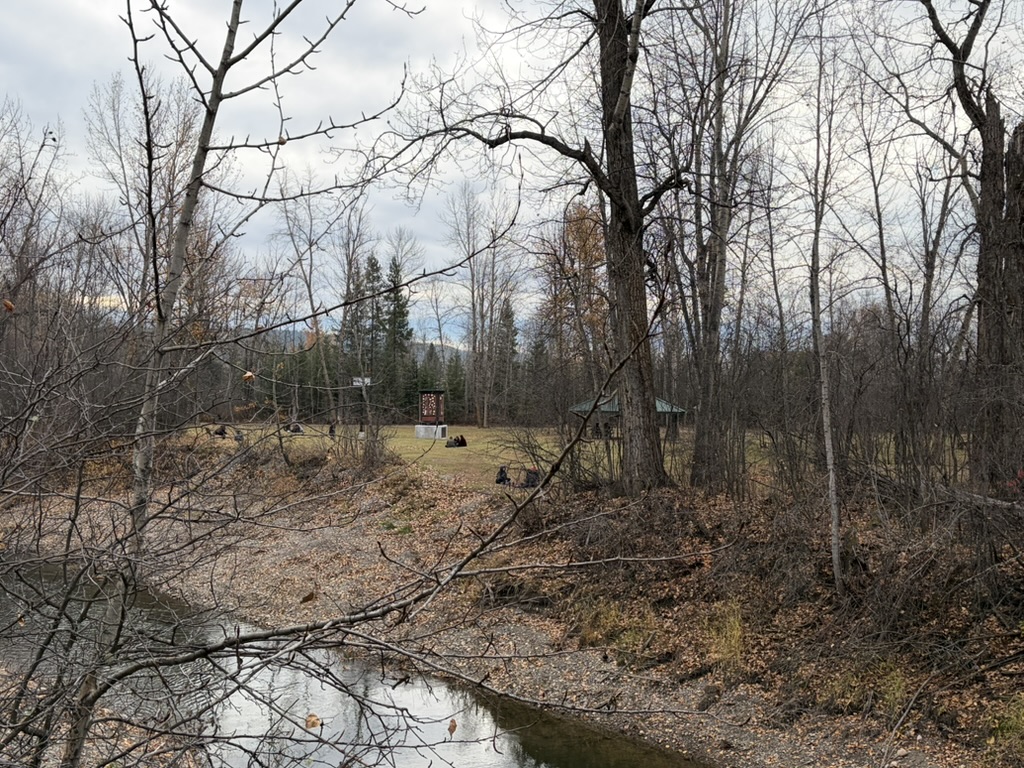
(Photo taken by Christine Ho Younghusband that was posted on Moodle)
Blanket Exercise

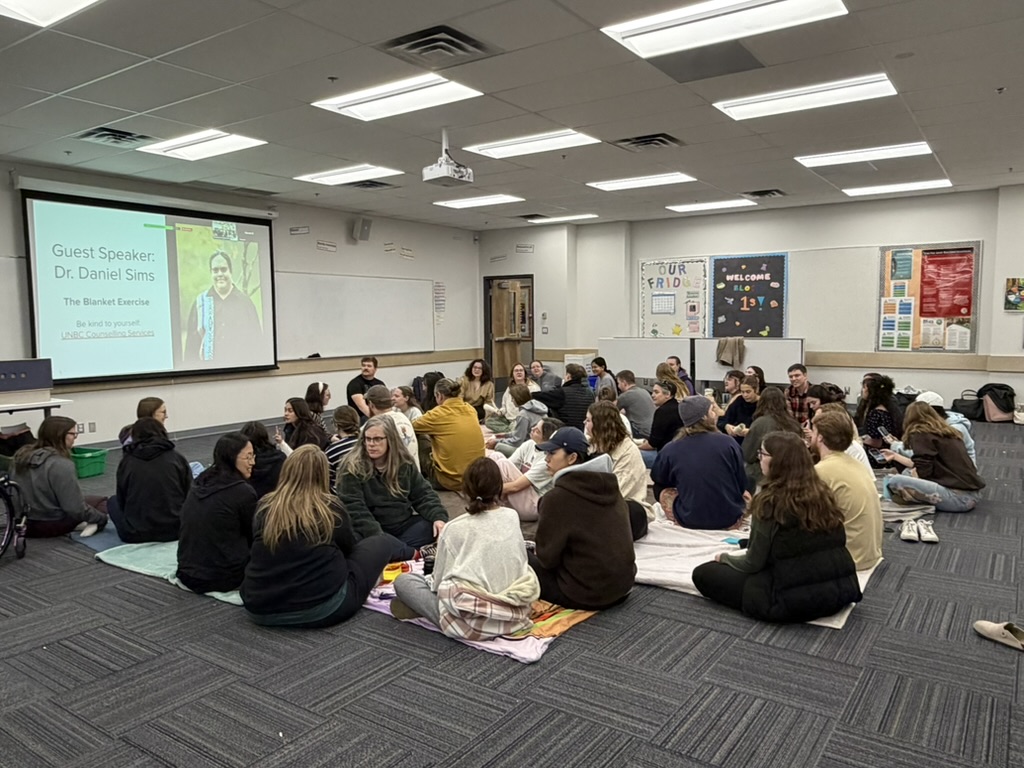
In class, we participated in the Blanket Exercise with Dr. Daniel Sims. The exercise began with our entire class sitting on blankets spread across the classroom floor. As Dr. Sims read about events that occurred throughout Canadian history and their impacts on Indigenous peoples, the blankets gradually became fewer in number as students were instructed to leave them and sit outside the group. Some students were also given scrolls that discussed government policies and their implications for Indigenous peoples. As the exercise continued, fewer and fewer students remained seated on the blankets.

One of the most difficult parts of this experience was watching the process unfold. It felt relentless, as Indigenous peoples continued to experience loss, displacement, and restrictions on their rights to their own lands. As students, we could only watch as the exercise progressed, which made the experience particularly emotional. It was difficult to comprehend how much Indigenous peoples were forced to endure throughout Canadian history, especially on lands that had been their homes for generations. At the same time, the exercise made me reflect on the strength and resilience of Indigenous peoples, who have maintained their cultures, communities, and connections to the land despite these injustices.

Some of the readings and examples Dr. Sims shared highlighted positive actions Indigenous individuals took throughout history. However, these moments felt small compared with the magnitude of the injustices Indigenous peoples experienced. Even actions that seemed significant were sometimes represented through something as simple as unfolding a corner of a blanket. This made me think about how difficult it must have been for individuals to create meaningful change while facing such overwhelming barriers. It also reminded me that even small acts of resistance and perseverance can carry meaning, even when they do not immediately undo the harm that has occurred.

After the exercise, we sat in a circle and discussed our feelings and reactions. One of my peers shared that they had been afraid of being removed from their blanket early in the exercise. When it eventually happened, they wished they had chosen a different blanket at the beginning because they wanted to remain part of the exercise for longer. This comment particularly resonated with me because it made me consider how Indigenous peoples may have felt as they experienced the loss of their homes, land, and control over their own lives. Although our classroom experience cannot compare to the real suffering Indigenous peoples endured, it helped me reflect on the fear, uncertainty, and powerlessness that can accompany having something so important taken away from you.

Overall, the Blanket Exercise gave me a more personal understanding of the impacts of colonization in Canada. Rather than simply learning about historical events through readings or lectures, we were able to experience a small part of the process and reflect on the emotions associated with it. The exercise reminded me of the importance of learning about Indigenous histories and perspectives, recognizing the ongoing impacts of colonization, and acknowledging the resilience of Indigenous peoples. As a future educator, I believe experiences like this can help me approach Indigenous histories with greater empathy, respect, and understanding, while recognizing the importance of teaching these histories accurately and meaningfully.

(Photo taken by Christine Ho Younghusband that was posted on Moodle)
West Lake Provincial Park

During class, we discussed the importance of visiting a place and experiencing it firsthand to develop a deeper understanding of it. This highlighted the value of experiential learning, which allows students to learn through direct experiences rather than relying solely on classroom instruction. Near the beginning of class, we spent approximately ten minutes individually at a location we called our “sit spot.” This activity encouraged us to slow down, observe our surroundings, and reflect on our relationship with the land.

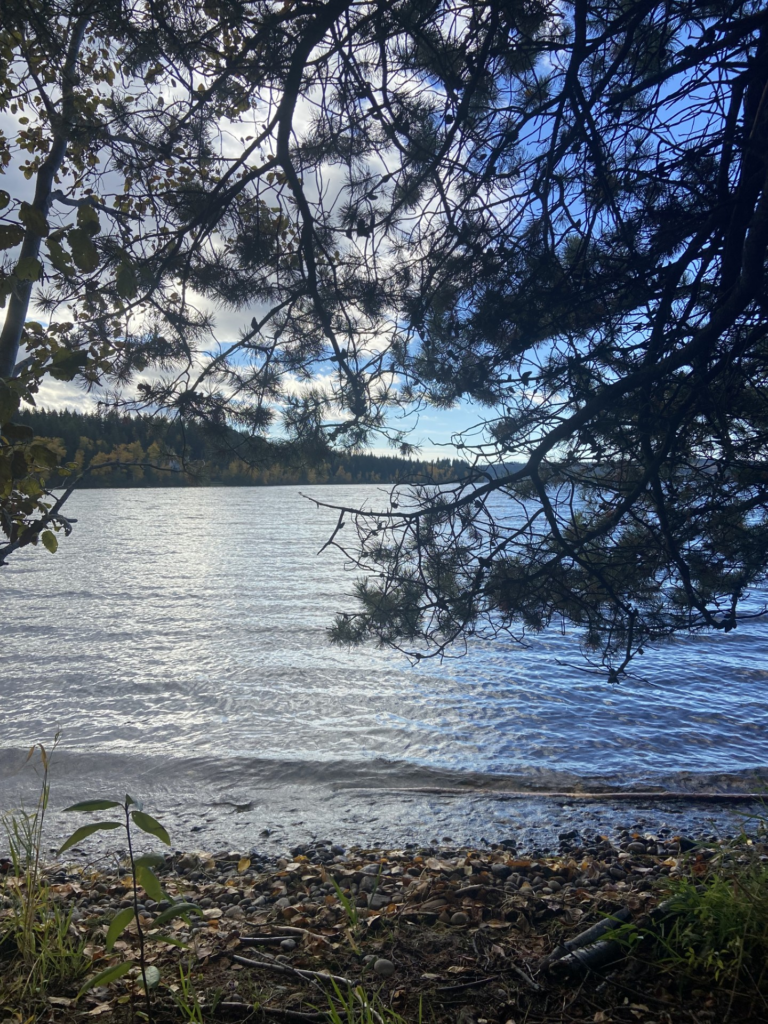
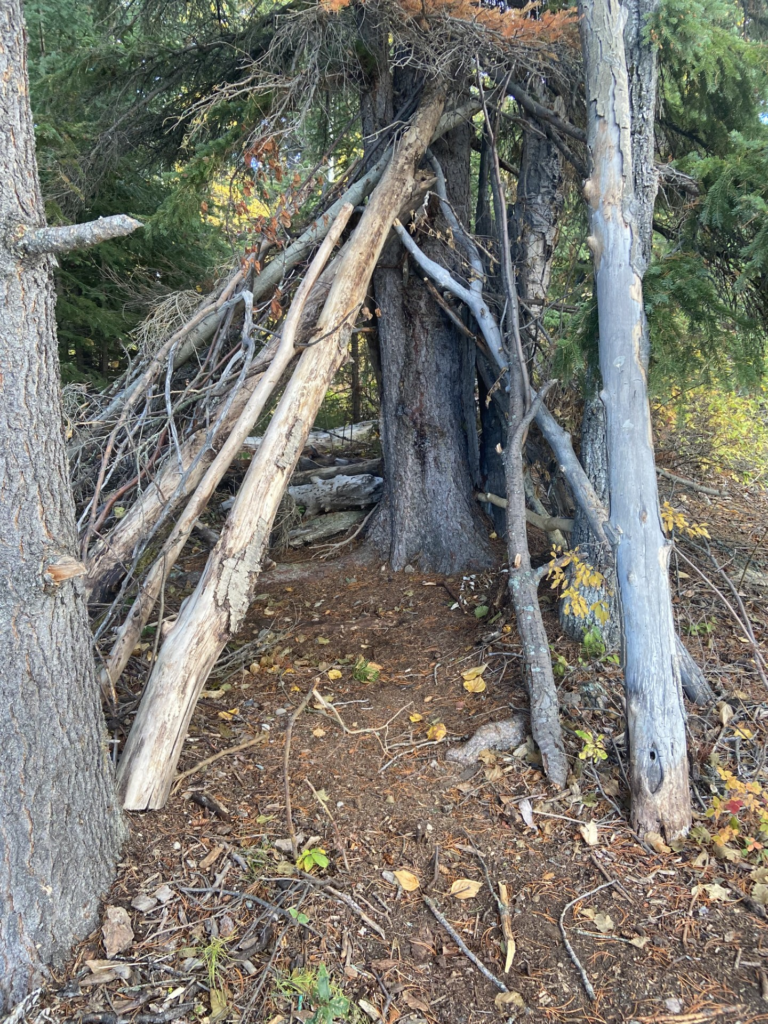
For my sit spot, I found a peaceful location near the lake, underneath the trees and inside a small fort made from branches. As I sat there, I could hear the waves crashing against the shore and the wind moving through the leaves. The peaceful surroundings allowed me to slow down, reflect, and reconnect with my childhood memories of spending time outdoors. The fort reminded me of the forts I used to build with my friends and siblings, using whatever materials we could find in nature. These memories made me reflect on how much nature has provided me with throughout my life without asking for anything in return.

This experience encouraged me to think about the relationship between people and the natural environment. Nature provides us with resources, opportunities for recreation, and spaces where we can find comfort and connection. However, I believe that nature also deserves to receive something in return through our respect, care, and protection. This reflection is particularly meaningful to me as a future teacher because I want to help students develop an appreciation for the natural world. I hope to teach children that caring for the environment is a shared responsibility and that taking action to address climate change is one way we can protect the land for future generations.

My experience at West Lake also reminded me of a field trip I attended in Grade 7, when my class visited an Indigenous historical site. During this visit, an Elder taught us that every part of nature has a story and its own history, including things that are not traditionally considered living. This lesson has stayed with me because it encouraged me to look beyond the physical characteristics of the natural environment and consider the histories and experiences connected to the land. My time at West Lake reminded me that there is much to learn from the places we visit, especially when we take the time to listen, observe, and reflect.

Another aspect of our class that stood out to me was the discussion about land acknowledgements and the suggestion to incorporate a personal story into them. I appreciated this idea because I find that I learn best when people share personal and memorable experiences. Including a meaningful story can make a land acknowledgement feel more personal and encourage people to think more deeply about their relationship with the land. Rather than simply repeating a statement, individuals can reflect on their own experiences and consider the histories, relationships, and responsibilities connected to the place where they live and learn. I believe this approach could also be valuable in the classroom, as it could help students develop a more meaningful connection to the land around them.

I also see potential in incorporating the walking curriculum into future classroom experiences. Rather than simply telling students to go outside and appreciate nature, a walking curriculum provides a framework that encourages them to observe, question, and engage with their surroundings. This approach can make outdoor learning more intentional by helping students recognize details they might otherwise overlook. It also creates opportunities to connect experiences outside the classroom to different areas of the curriculum. Through these activities, students can develop curiosity, environmental awareness, and a stronger appreciation for the natural world.

During our group work, I was particularly interested in learning how Indigenous knowledge and perspectives can be incorporated into every subject area. This challenged me to think more broadly about how Indigenous perspectives can be meaningfully included in my future classroom rather than being limited to specific lessons or units. At the same time, I recognize that Indigenous Peoples and communities are diverse, with distinct histories, cultures, languages, and ways of knowing. Therefore, incorporating Indigenous perspectives requires more than finding resources online or adding Indigenous content to existing lessons. It requires an understanding of the specific community in which I will be teaching and a commitment to developing respectful relationships.

One area I hope to learn more about is how to begin building relationships with Indigenous Peoples and communities in the area where I will eventually teach. I want to incorporate Indigenous principles of learning into my classroom, but I also want to ensure that I do so respectfully and appropriately. I understand that building relationships takes time and that I should not approach community members simply to ask for resources or assistance. Instead, I need to learn how to begin developing relationships based on trust, respect, and reciprocity. I am interested in understanding how to put the Four R’s into practice in a way that reflects these commitments, but I am still unsure what the first steps should look like.

Overall, my experience at West Lake reminded me that learning does not always need to happen inside a classroom. Spending time at my sit spot allowed me to reconnect with childhood memories, reflect on my responsibilities toward the environment, and consider how meaningful relationships with the land can influence teaching and learning. As a future teacher, I hope to create opportunities for students to develop their own connections with the natural world while learning to respect the knowledge and histories associated with the places they inhabit. Moving forward, I want to continue learning how to build meaningful relationships with Indigenous communities so that I can create a classroom environment that values diverse perspectives and approaches Indigenous knowledge with care and respect.

Beaded Tweets with Noelle Pepin, Indigenous perspectives & knowledge in BC’s Curriculum, Standard 9

During class on September 28th, we watched a TED Talk by Kevin Lamoureux about Truth and Reconciliation. In this TED Talk, Kevin discussed how reconciliation can be understood as a gift from Indigenous peoples to Canada. He explained how Indigenous children experienced some of the absolute worst treatment from Canada, yet Indigenous peoples have continued to offer a hand of friendship in return. This idea of extending friendship and creating opportunities for connection was demonstrated in our classroom through the work of Noelle Pepin, the creator of Beaded Tweets.

In our classroom, we discussed how Noelle Pepin developed Beaded Tweets as an opportunity to teach children coding while also encouraging them to bring intention into the work they do as individuals. Through participating in Beaded Tweets, we were taught to slow down and consider the feelings, thoughts, and intentions we bring to the process. We learned that what we put into our work is reflected in what the person receiving the finished product experiences. The first Beaded Tweet we create is meant to be given away as a gift. When I reflect on what Kevin Lamoureux discussed about reconciliation being a gift and an offering of friendship, I can see a connection between this activity and the idea of building relationships through generosity and care.

When we put intention into the work we do, that work becomes more purposeful. Beaded Tweets showed us that learning does not always have to be about completing a task or producing an outcome. It can also be about the process, the relationships we build, and the meaning we create through our actions. The act of giving away our first beadwork encourages us to think beyond ourselves and consider the person who will receive what we have created.

This experience also connects to Standard 9, which asks educators to incorporate Indigenous perspectives and knowledge into teaching and learning. Rather than simply learning about Indigenous peoples, activities such as Beaded Tweets provide an opportunity to engage with Indigenous ways of knowing through relationship, intention, reciprocity, and giving. It reminds us that Indigenous knowledge can be integrated across different areas of learning, including technology and coding, while still maintaining its cultural meaning and purpose.

As a future educator, this experience made me think about how I can create learning opportunities that encourage students to slow down, be intentional, build relationships, and think about how their actions affect others. When we participate in activities such as Beaded Tweets and bring intention to the process, we are not only learning a skill; we are also learning about the importance of connection, reciprocity, and giving. These are ideas that can help create a classroom environment where students learn to understand themselves, others, and their responsibilities within a community.

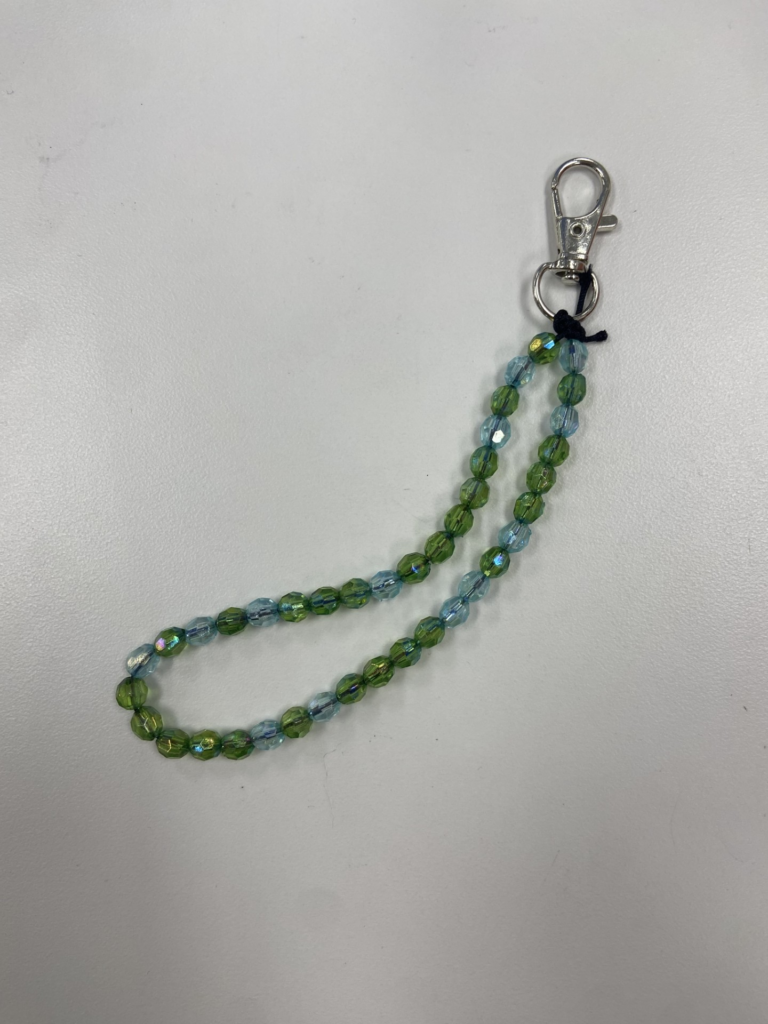
My Beaded Tweet spells out the word “PEACE.” I think this word connects strongly to the ideas we discussed around Truth and Reconciliation. Creating something that represents peace made me think about what it means to build relationships and move forward together.

Powered by WordPress & Theme by Anders Norén